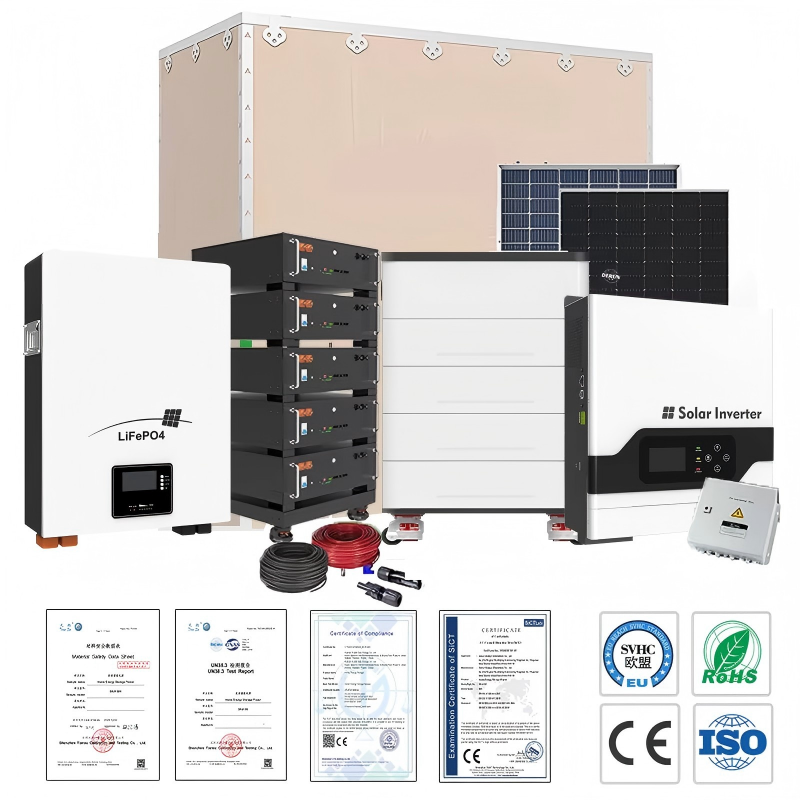
Facilities with continuous heavy loads – such as metal processing, plastic injection molding, or multi-story commercial complexes – often face two acute pains: punitive demand charges for spikes above 50 kW, and vulnerability to grid instability that halts production. Our 50kW solar storage system is purpose‑engineered as a standalone energy island. The heavy-duty hybrid inverter delivers 60 kW continuous (75 kW surge for 20 seconds) and directly interfaces with a large-scale LFP battery from 50 kWh to 300 kWh. This configuration enables true industrial energy autonomy during daytime peak tariffs, while the patented peak demand elimination algorithm cuts monthly utility bills by targeting the single highest 15‑minute draw.
| Parameter | Value |
|---|---|
| Rated AC Output | 50 kW (400V / 480V three-phase, 4-wire) |
| Max PV Input | 75 kWp (10 MPPT channels, 2 strings each) |
| Battery Voltage Range | 400 – 800 V DC (ultra-high voltage architecture) |
| Recommended Battery Capacity | 50 – 200 kWh (large-scale LFP battery, floor rack) |
| Inverter Type | Heavy-duty hybrid inverter (IP65, dual cooling fans, type I+II SPD) |
| Peak Efficiency | 98.3% (PV to AC) / 94.5% round-trip |
| Overload Capability | 120% continuous, 150% for 20 seconds |
| Communication | Ethernet, RS485, CAN, optional 4G gateway |
| Parallel Units | Up to 8 units (400 kW total, no master controller) |
Peak demand elimination logic – Unlike standard systems that react to spikes, the 50kW solar storage system uses predictive load learning. After a 7‑day learning period, the heavy-duty hybrid inverter starts discharging the large-scale LFP battery 2‑3 minutes before an anticipated spike, completely shaving the peak rather than simply clipping it. Verified 53% demand reduction in a plastic injection site.
Ultra‑high voltage battery bus (800V) – Operating at 800 V DC reduces current by 60% compared to 400 V systems. This allows cable runs up to 150 meters between inverter and battery rack without expensive copper. The large-scale LFP battery modules are pre‑assembled in a 19‑inch rack with integrated contactors and fuses – installers only need to connect a single DC pair.
Dual AC output ports – The heavy-duty hybrid inverter features two independent AC output terminals: one for critical loads (uninterruptible backup) and one for non-critical loads (sheddable during grid outage). This eliminates the need for an external transfer switch, saving $1,200–1,800 per installation.
Generator‑less microgrid – For sites targeting industrial energy autonomy, the system can operate completely off‑grid using solar and battery alone, provided the large-scale LFP battery is sized for overnight loads. A built‑in load controller automatically sheds non‑critical circuits when battery state of charge drops below 20%.
Remote fleet management portal – Monitor phase‑wise power, battery cell temperature, and remaining cycle life for up to 500 units from a single dashboard. The 50kW solar storage system generates automated weekly performance reports that installers can white‑label for end customers.
Heavy manufacturing (metal stamping, injection molding, CNC machining) – These sites typically have a stable baseload of 30‑40 kW with short, violent spikes above 100 kW during press operations. Standard 40 kW units cannot handle the surge without tripping. Our 50kW solar storage system with peak demand elimination pre‑emptively injects battery power 15 seconds before each press cycle, keeping grid draw flat at 45 kW. A stamping plant reduced its monthly demand charge from 900.
Multi‑story commercial buildings (15–30 tenants, central HVAC) – Elevators, water pumps, and chiller compressors create unpredictable load patterns. The heavy-duty hybrid inverter’s dual‑output design keeps elevators (critical) powered during brief grid flickers while shedding hallway lighting (non‑critical). The large-scale LFP battery also enables industrial energy autonomy for up to 6 hours during evening peak tariffs.
Small industrial parks (3–5 factories sharing a transformer) – With parallel capability, two units of 50kW solar storage system create a 100 kW shared storage asset. The integrated EMS arbitrates between tenants: each factory’s CT measures its own load, and the large-scale LFP battery discharges proportionally. No separate energy meter or billing software required – the inverter logs each tenant’s usage.
Large‑scale agricultural irrigation (center pivot pumps, 50–75 HP) – Remote farms often suffer from weak grid or no three‑phase connection. This system acts as a virtual three‑phase source: dual solar inputs charge the large-scale LFP battery, and the heavy-duty hybrid inverter generates clean three‑phase power for the pump. Diesel backup is eliminated entirely, achieving full industrial energy autonomy during daylight irrigation hours.
Island/resort microgrids (50–150 room facilities) – Resorts require silent, emission‑free power for guest areas but have high nightly consumption (AC, refrigeration). The 50kW solar storage system’s peak demand elimination shifts afternoon solar to evening diesel‑off hours. The 800 V architecture supports longer cable distances between the storage container and villa distribution boards.
The 50kW solar storage system is not simply a larger variant of lower‑power offerings – it introduces true peak demand elimination through predictive learning, an ultra‑high voltage large-scale LFP battery bus for long‑distance DC wiring, and dual AC outputs that eliminate external transfer switches. For integrators serving heavy industrial or large commercial sites, this platform delivers measurable ROI within 18–24 months while providing industrial energy autonomy that keeps critical processes running through grid disturbances. Global stock of 80+ units (lead time 10 working days), with free load‑logging service for the first 30 days. Extended warranty to 15 years available for the large-scale LFP battery (prorated).
We provide comprehensive B2B Technical Support, including system sizing consultations, remote diagnostic assistance, and localized marketing materials. Our Solar Inverters and ESS products typically carry a 5 to 10-year performance warranty. We also maintain a specialized engineering team to assist B2B partners with troubleshooting and firmware updates, ensuring the stability and longevity of every Renewable Energy Storage project we supply.
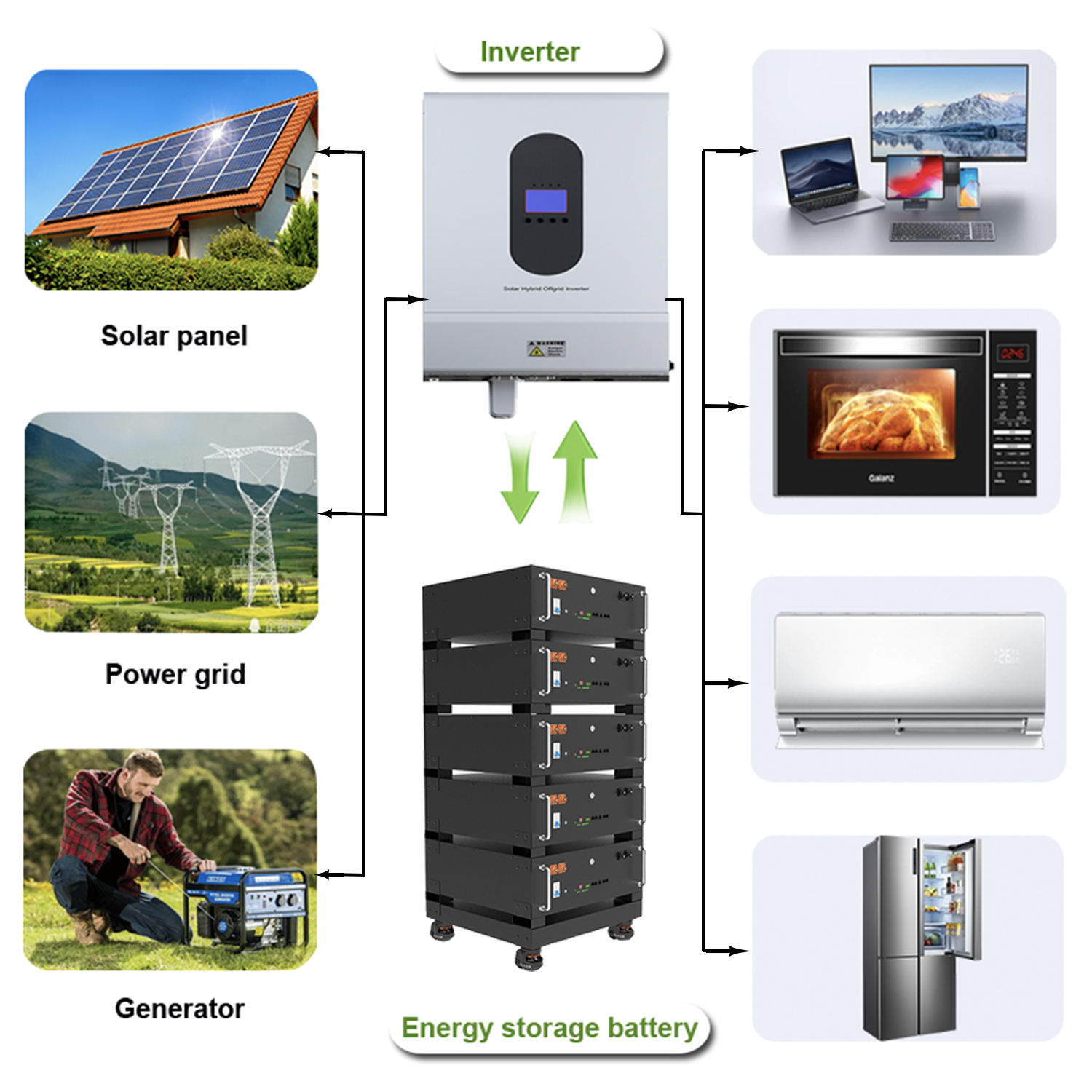
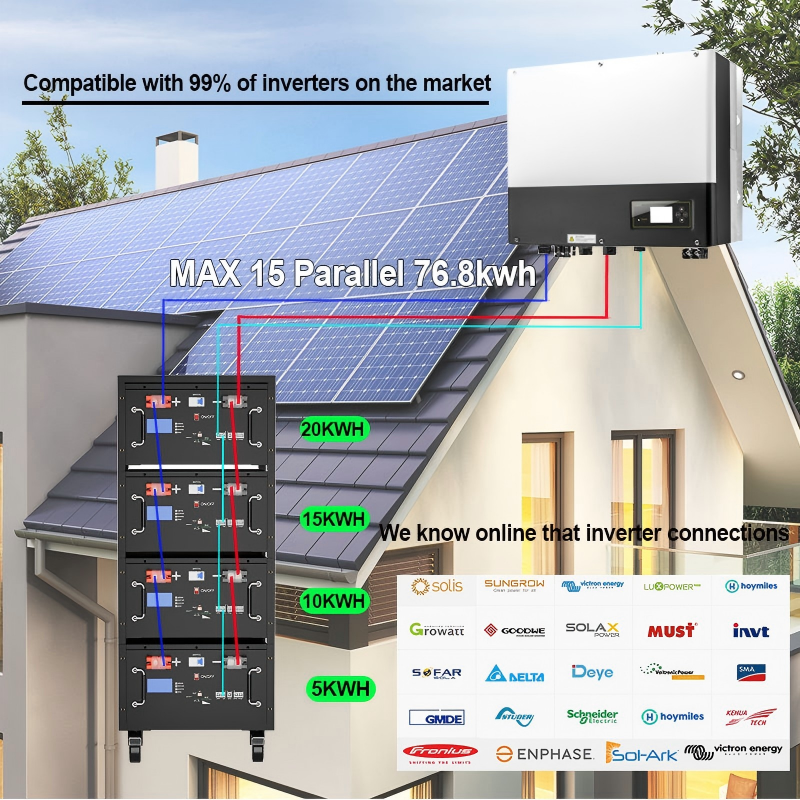
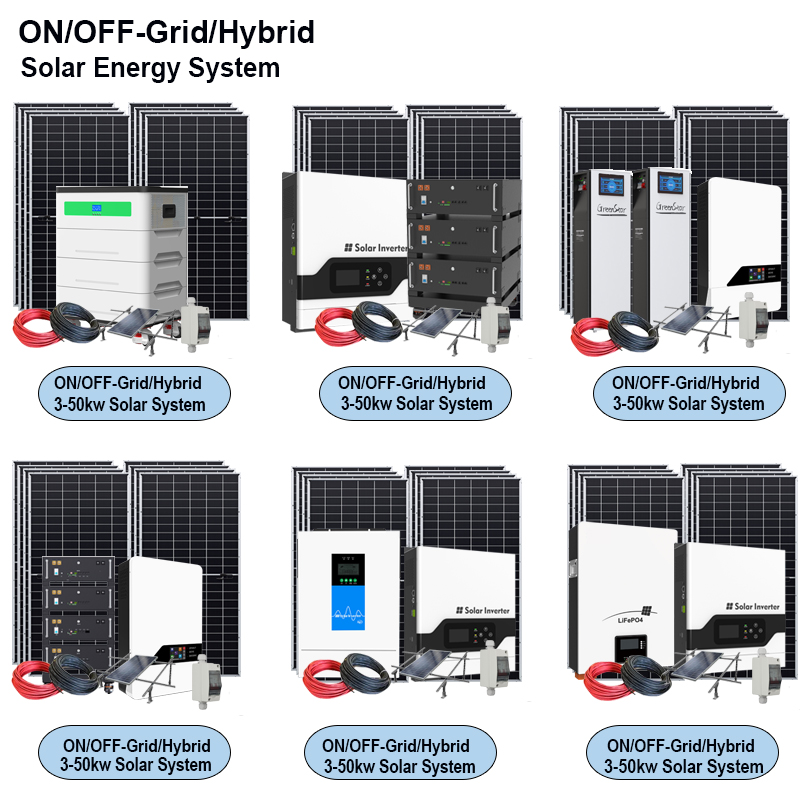
Yes, scalability is a core advantage of our Modular Energy Storage architecture. Our Stackable Battery Storage units and Hybrid Inverters support parallel configurations. For instance, up to 15 battery modules can be synchronized to create a high-capacity Solar ESS, and multiple inverters can be paralleled to handle larger loads. This allows EPC contractors to deploy tailored energy solutions that grow alongside the client's energy demands.
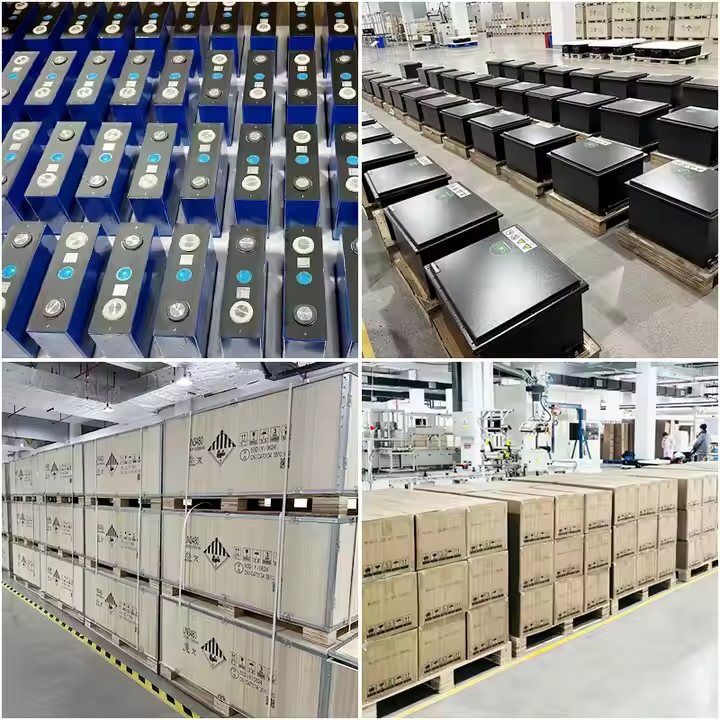
Every Jiahongyu LiFePO4 Battery module is equipped with an industrial-grade Smart BMS (Battery Management System). This system provides real-time monitoring of cell-level telemetry, including voltage balancing, thermal management, and over-current protection. With Grade-A cells, our storage units offer over 6,000 deep-cycle lives, providing a high-ROI Lithium Battery Backup solution for mission-critical residential and commercial applications.
A: Our Hybrid Inverter series is engineered with a multi-protocol communication interface, supporting CAN, RS485, and RS232. This ensures seamless integration with leading LiFePO4 battery brands and allows for firmware adjustments to meet specific regional grid codes (such as CE, AS4777, or IEEE 1547). For system integrators, this flexibility simplifies the installation of a comprehensive Solar Energy Storage System across diverse international markets.