• 120kW DC Fast Charger Dual-Gun EV Charging Station Solar-Storage EVSE Hub
  • 120kW DC Fast Charger Dual-Gun EV Charging Station Solar-Storage EVSE Hub
  • 120kW DC Fast Charger Dual-Gun EV Charging Station Solar-Storage EVSE Hub
  • video

120kW DC Fast Charger Dual-Gun EV Charging Station Solar-Storage EVSE Hub

  • JHY
  • China
  • 45
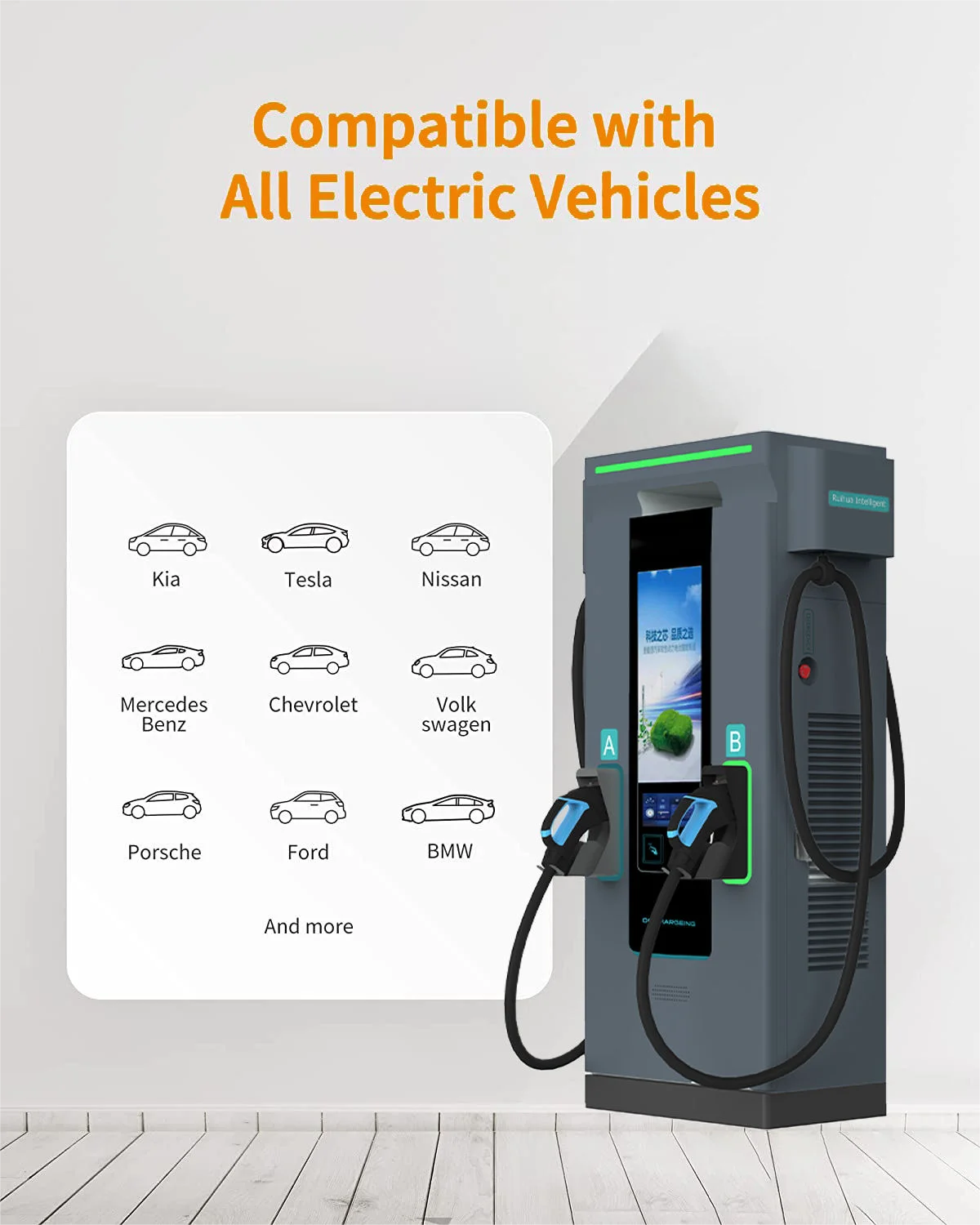
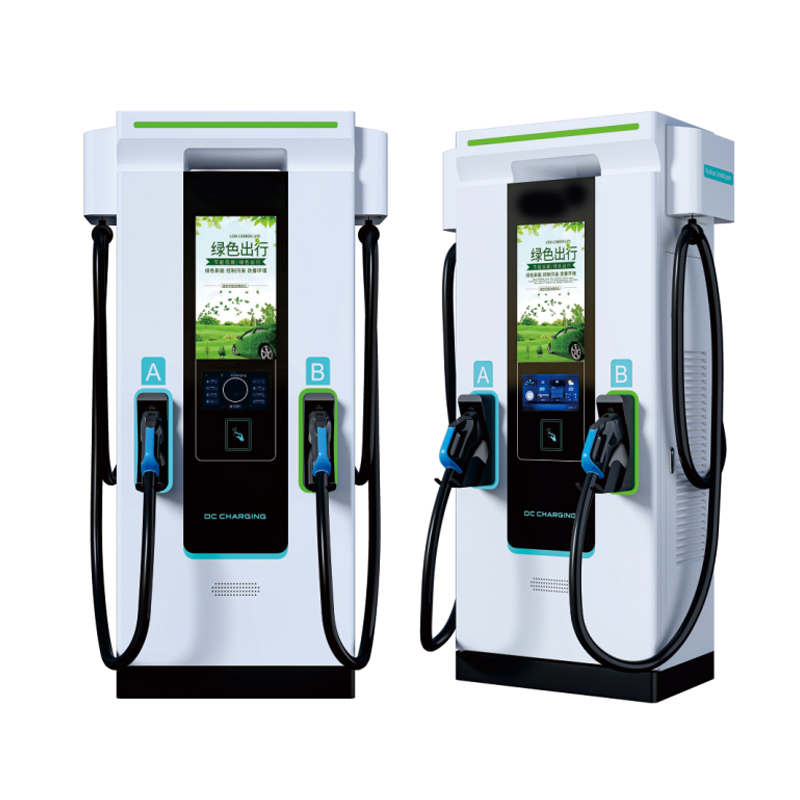
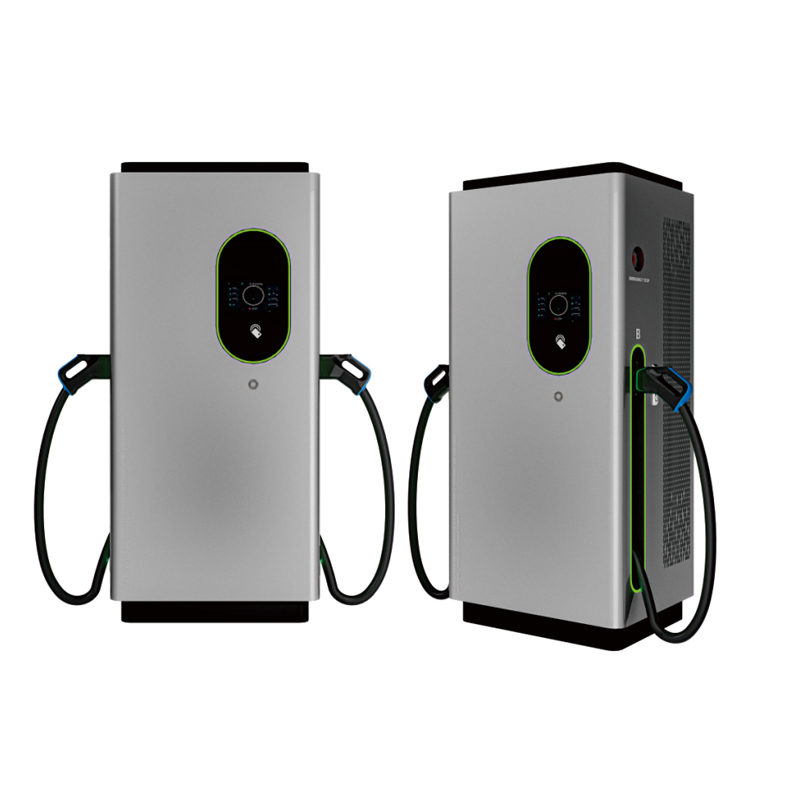
Architected for high-throughput electrification environments, this DC fast charger delivers simultaneous high-power dispensing through dual liquid-cooled cables. The cabinet integrates rectification, power allocation, and thermal management within a single footprint, enabling charge point operators to deploy dual-gun EV charging without external transformer vaults or auxiliary cooling loops. When paired with co-located photovoltaic arrays and lithium buffers, the unit functions as a solar-storage EVSE node capable of demand-charge arbitrage and grid services participation.

Electric Vehicle Charging Station 160kw EV Charger
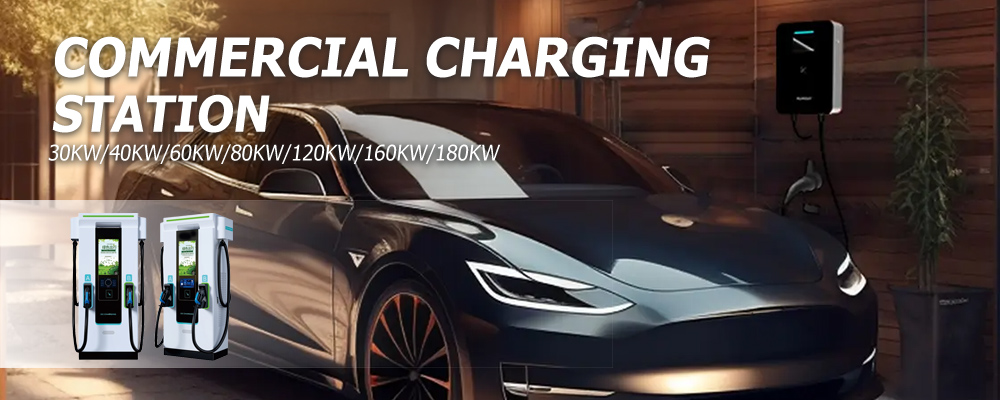

DC Fast Charger

Rated power
60kW/80KW/120KW/150KW/180KW
Input Max Current
60A/80A/120A/180A
Voltage
380V
Charging Interface
CCS2+CCS2   /   CCS2+ GB/T
Cable Length
 5m (Optional:6.0m/8.0m)
CCS Cables Maximum Current
Standard:200A High Current:400A
CHAdeMO Cables Maximum Current
120A / 180A
Connector Types
3-Phase, Neutral, Protective Earth (CE Models)                                              3-Phase, Protective Earth (UL models)
Overvoltage Category
Type II
Constant power output voltage range
DC300-750V
Input voltage
AC380 ± 20%
Input frequency
50Hz ± 10%
Output voltage range
DC150-750v (1000V)
Power Factor(full load)
>0.96
THDi
< 4.5%
Efficiency
> 95% (Peak)
Standby Power
80W 980W (With Heater Active)
Short Circuit Current
10 KA (CE Models) 65 KA (UL Models)
Pre- Charge Current
< 1 A
Inrush Current
< 100 A
Leakage Current
0.8 mA


Core Commercial Advantages
Dynamic Power AllocationThe DC fast charger intelligently splits 120kW capacity between two vehicles based on state-of-charge and battery acceptance rates. Fleet operators maximize asset utilization during shift changes, while public operators reduce customer wait times during peak high-power charging station utilization windows.
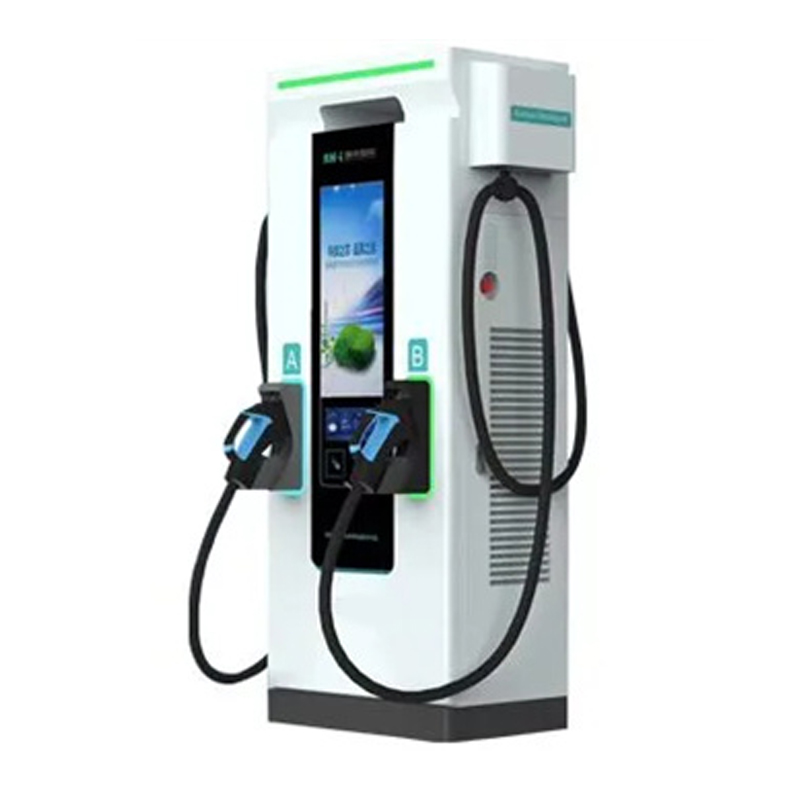
Liquid-Cooled Cable ArchitectureHigh-amperage delivery without conductor bulk enables ergonomic handling and extended cable reach. Maintenance crews replace worn dual-gun EV charging assemblies without draining coolant loops or recalibrating thermal systems, minimizing mean-time-to-repair in revenue-critical deployments.
Storage-Buffered Peak ShavingDC-coupled architecture accepts direct connection to battery inverters, allowing the solar-storage EVSE configuration to discharge stored energy during high-demand charging events. Site hosts avoid demand-charge penalties and defer costly service upgrades while maintaining 120kW output capability.
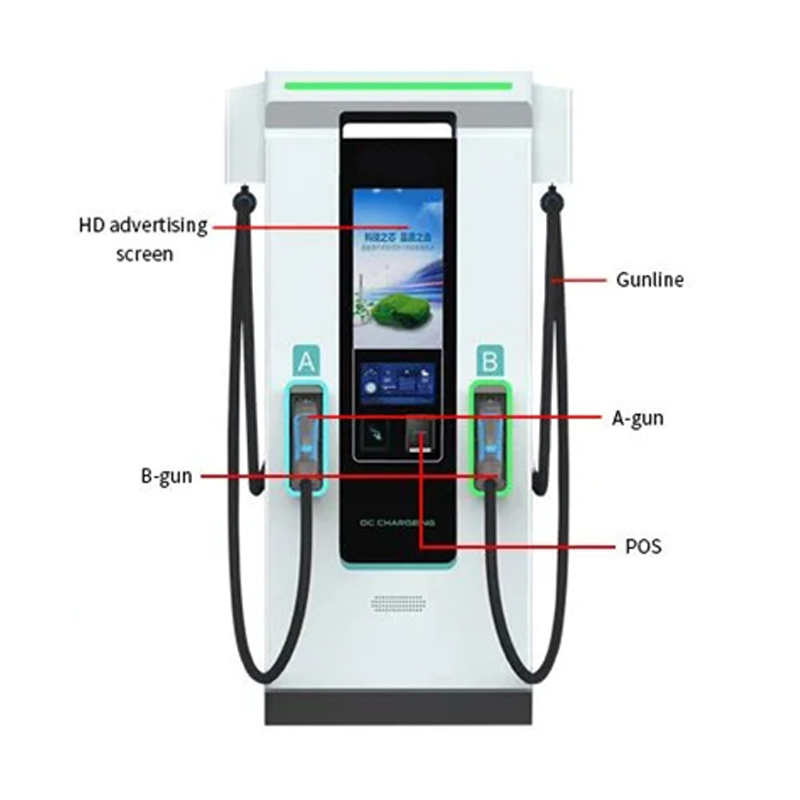
Revenue Diversification PlatformThe 32-inch portrait display supports third-party advertising and dynamic pricing interfaces. Charge point operators monetize dwell time beyond electron sales, transforming fleet EVSE infrastructure into media networks with incremental revenue streams subsidizing capital recovery.
V2G Bidirectional ReadinessISO 15118-20 compliance enables future vehicle-to-grid functionality without hardware replacement. Grid operators and aggregators pre-position this high-power charging station as distributed energy resources, accessing parked vehicle batteries for frequency regulation and peak shaving services.

Dual-Gun EV Charging

Deployment Scenarios

  • Heavy-Duty Fleet Depots: Return-to-base charging for electric trucks, buses, and delivery vans during layover windows
  • Highway Corridor Charging: Interstate and arterial highway locations serving long-distance passenger EVs
  • Urban Transit Hubs: Opportunity charging for electric buses at terminal loops and layover points
  • Commercial Truck Stops: Electrified parking serving drayage, regional haul, and last-mile logistics
  • Municipal Charging Plazas: Public-access hubs with multiple high-power dispensers and canopy solar integration
Summary
This DC fast charger addresses the infrastructure gap between passenger vehicle convenience charging and heavy-duty fleet requirements. The dual-gun EV charging capability doubles throughput per cabinet, improving site economics where land and grid capacity constrain dispenser density. As a solar-storage EVSE platform with native V2G readiness, it positions charge point operators and fleet managers to capture value from evolving grid services markets while delivering the reliability expectations of fleet EVSE infrastructure stakeholders. The unit represents a depreciable asset with 15-year service life alignment, matching the amortization schedules and technology refresh cycles typical of high-power charging station deployments.


What level of technical support and warranty protection does Jiahongyu provide to overseas distributors and installers?

We provide comprehensive B2B Technical Support, including system sizing consultations, remote diagnostic assistance, and localized marketing materials. Our Solar Inverters and ESS products typically carry a 5 to 10-year performance warranty. We also maintain a specialized engineering team to assist B2B partners with troubleshooting and firmware updates, ensuring the stability and longevity of every Renewable Energy Storage project we supply.

Can your solar storage solutions be scaled for high-demand commercial or industrial (C&I) requirements?

Yes, scalability is a core advantage of our Modular Energy Storage architecture. Our Stackable Battery Storage units and Hybrid Inverters support parallel configurations. For instance, up to 15 battery modules can be synchronized to create a high-capacity Solar ESS, and multiple inverters can be paralleled to handle larger loads. This allows EPC contractors to deploy tailored energy solutions that grow alongside the client's energy demands.

What safety protocols are integrated into the LiFePO4 battery storage modules to ensure long-term industrial reliability?

Every Jiahongyu LiFePO4 Battery module is equipped with an industrial-grade Smart BMS (Battery Management System). This system provides real-time monitoring of cell-level telemetry, including voltage balancing, thermal management, and over-current protection. With Grade-A cells, our storage units offer over 6,000 deep-cycle lives, providing a high-ROI Lithium Battery Backup solution for mission-critical residential and commercial applications.

How does the Jiahongyu Hybrid Inverter ensure compatibility with different global grid standards and battery brands?

A: Our Hybrid Inverter series is engineered with a multi-protocol communication interface, supporting CAN, RS485, and RS232. This ensures seamless integration with leading LiFePO4 battery brands and allows for firmware adjustments to meet specific regional grid codes (such as CE, AS4777, or IEEE 1547). For system integrators, this flexibility simplifies the installation of a comprehensive Solar Energy Storage System across diverse international markets.

Related Products

Get the latest price? We will reply as soon as possible (within 12 hours)